
Cooling · July 9, 2026 · By Doug Kelley, Master Licensed HVAC Technician
Ice on Your AC Lines? Here Is What It Means and What to Do
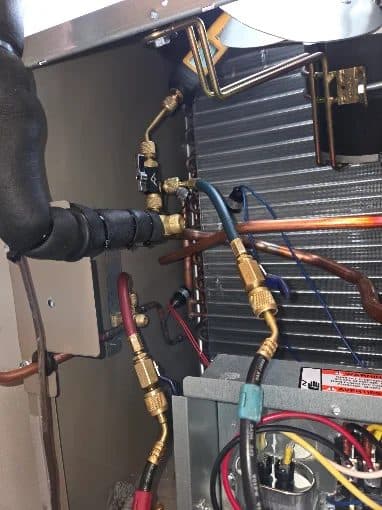
Finding ice on your air conditioner during a heat wave feels impossible, but it is one of the most common cooling failures there is. The short version: something made the indoor coil run colder than design, moisture froze on it, and the ice snowballed. Here is what is going on and exactly what to do.
First, and most important: turn the cooling off
Running a frozen system is how a fixable problem becomes a dead compressor. Liquid refrigerant that should be evaporating in the iced coil can slug back to the compressor, and the compressor is the most expensive component in the system. Switch the thermostat to OFF, and if you want to speed the thaw, set the fan to ON so household air melts the coil from inside. A full thaw takes several hours; a heavily iced system can take most of a day.
Why coils freeze
- Starved airflow: a clogged filter, blocked returns, a dirty blower wheel, or a matted indoor coil
- Low refrigerant: less refrigerant means lower coil pressure and temperature, which means ice, and low refrigerant means a leak
- A failing blower motor moving less air than it should
- Running the AC in cool outdoor weather, below roughly 60 degrees, which drops coil conditions below freezing
The one homeowner fix worth trying
After a complete thaw, install a fresh filter, open every register, and run the system again. If the freeze was pure airflow starvation from a neglected filter, this genuinely solves it, and no service call is needed. Watch the copper lines over the next day: staying dry and sweating normally is a good sign, frost creeping back is your answer that the problem is deeper.
If it refreezes, stop there
A refreeze after a clean filter points at low charge or mechanical airflow problems, and both are technician work. Refrigerant diagnosis requires gauges and an EPA license, and a proper repair finds and fixes the leak rather than topping off a system that will just freeze again next month. Tell us it froze, that you thawed it, and that it froze again with a new filter, and we arrive knowing half the diagnosis already: (443) 310-0206. And if this is a recurring annual event on an aging system, it is worth an honest conversation about whether the next repair dollar belongs in this unit at all.