
Commercial · March 19, 2026 · By Doug Kelley, Master Licensed HVAC Technician
Restaurant HVAC: Keeping the Dining Room Comfortable and the Kitchen Survivable
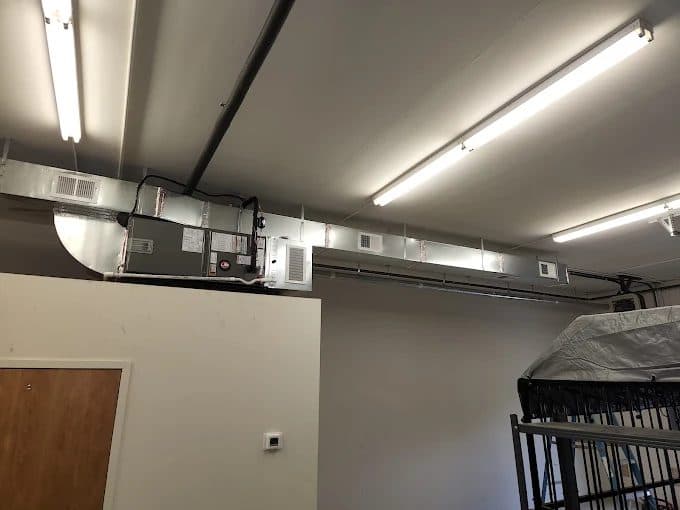
No light commercial space abuses HVAC like a restaurant. The kitchen generates brutal heat and grease-laden air, the hood exhausts enormous volumes that must be replaced from somewhere, the dining room swings from empty to packed in an hour, and the entire business model collapses if customers are uncomfortable on a Saturday night. From Kent Narrows seafood houses to Chestertown cafes, here is what restaurant owners on the Shore should understand about their systems.
The makeup air problem, explained
Your hood exhausts thousands of cubic feet of air per minute, and that air must come from somewhere. Without adequate makeup air, the building runs at negative pressure: doors pull hard, the dining room drafts, pilot flames and combustion appliances misbehave, and in summer the deficit gets yanked in as humid outdoor air through every gap, which your AC then fights all night. If your front door whistles and the AC never catches up on busy nights, you likely have a makeup air problem wearing an air conditioning costume.
Why restaurant equipment fails young
Grease is the villain. Even with good hoods, aerosolized grease escapes into the space, coats coils, mats filters in weeks rather than months, and glues dust into insulation on everything. Filters in restaurant service need changing at a rhythm that would seem paranoid in an office, and coils need real cleaning on a schedule, or capacity quietly bleeds away until the first heat wave exposes it. Rooftop units over kitchens live the hardest life of all, and they are the equipment nobody looks at until it quits.
The uptime playbook
- Aggressive filter program, monthly or better in grease-adjacent zones
- Coil cleaning on a fixed schedule, not on complaint
- Spring cooling service before the season, because a failed dining room AC in July costs covers, not just repairs
- Fall heat service, including CO-safe combustion checks where gas heat serves occupied space
- A written condition report per visit, so the eventual unit replacement is a budgeted line, not a crisis
- A contractor who schedules around service hours; we work around your covers, not through them
The zone-comfort trick worth knowing
Server rooms, offices, walk-in-adjacent prep areas, and additions frequently do better on independent ductless units than as afterthought branches of the main system: individual control, no load added to strained equipment, and redundancy if the big unit ever drops on a Friday. It is one of the cheapest resilience upgrades a restaurant can buy. For a maintenance plan built around your actual hours and equipment: (443) 310-0206.